

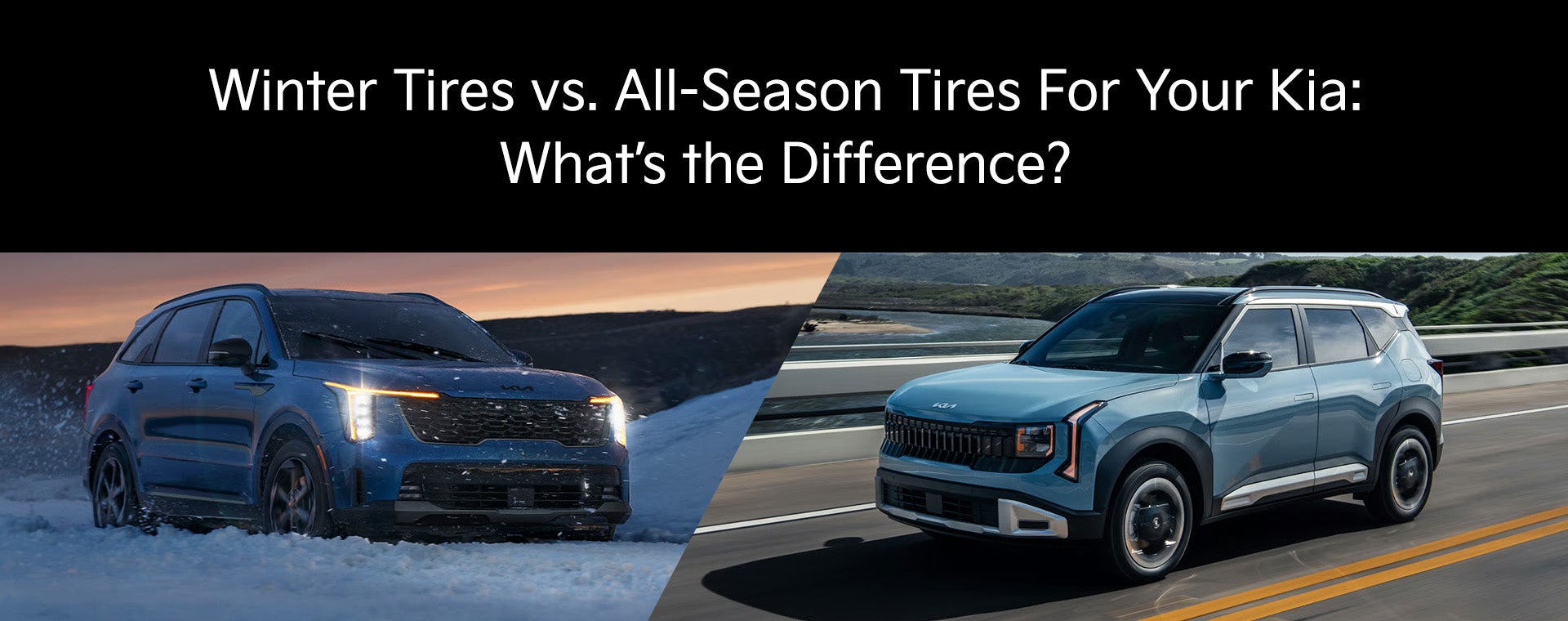
November in the Capital Region has a way of keeping drivers guessing. One afternoon you're enjoying a relatively mild drive along Central Avenue. A few mornings later, you're scraping frost off your windshield and wondering whether the roads will be slippery before you even leave the driveway. It's also the time of year when an important question comes up: Are all-season tires enough for an Albany winter, or should you switch to winter tires?
The answer depends on where, when, and how you drive. At Destination Kia, we know that a Kia Sportage commuting through Albany may face different winter conditions than a 2027 Kia Sorento traveling the back roads around Clifton Park or Schenectady. Understanding what each tire type does best can help you make a smarter decision before the first major snowfall.
What's the Kia Difference Between Winter Tires and All-Season Tires?
All-season tires are designed to handle a wide range of everyday conditions, including dry pavement, rain, and some light snow. They're a practical choice for drivers who want year-round convenience without changing tires every season. Winter tires are designed specifically for cold weather. Their rubber compounds remain more flexible as temperatures fall, helping them maintain contact with the road when conventional all-season rubber begins to stiffen.
The tread design is different, too. Winter tires generally feature deeper grooves and additional small cuts called sipes, which create biting edges to help grip snowy and icy surfaces. The biggest differences come down to three things:
Cold-weather traction: Winter tires are engineered to maintain grip in temperatures consistently below approximately 45°F.
Snow and slush performance: Specialized tread patterns help winter tires manage snow, slush, and icy pavement.
Year-round convenience: All-season tires are designed for a broader range of temperatures and generally make more sense for warm-weather driving.
Neither tire type eliminates the risks of winter driving, but choosing the right one can make a meaningful difference in challenging conditions.
Why 45 Degrees Matters Before Freezing Albany Temps
A common misconception is that winter tires are only necessary when snow is covering the road. In reality, temperature is one of the biggest reasons to consider switching tires. Once temperatures regularly fall below 45°F, winter tire compounds are better suited to maintaining flexibility and grip. That matters even on dry pavement, especially during early-morning commutes when the roads are cold.
Around Albany, Schenectady, and Clifton Park, drivers can experience freezing temperatures well before the first significant snowstorm. And when snow does arrive, the difference between a main road that's already been treated and a shaded neighborhood street can be substantial. Winter tires are designed to help with acceleration, cornering, and braking in these conditions. They aren't a substitute for slowing down or leaving extra following distance, but they provide an important advantage when temperatures drop.
Does Your Kia Need Winter Tires if It Has All-Wheel Drive?
This is where things get interesting. Many Kia drivers choose available all-wheel drive for additional confidence in rain, snow, and changing road conditions. Models like the Kia Sportage, Sorento, Seltos, and Telluride offer AWD on select configurations. But all-wheel drive and winter tires do different jobs. AWD helps distribute power to the wheels to improve traction when accelerating. Winter tires improve the grip available between the tires and the road, which also affects steering and braking. In other words, AWD may help your Kia get moving on a snowy road, but it doesn't automatically help you stop sooner on ice. For drivers who regularly travel through the Capital Region during snowstorms, especially on less-traveled roads, a dedicated set of winter tires can be worth considering even if their Kia has AWD.
When Should Albany Kia Drivers Switch to Winter Tires?
The best time to think about winter tires is before the first winter storm arrives. If temperatures are consistently approaching or dropping below 45°F, it's a good time to evaluate your current tires and consider whether a seasonal change makes sense. Waiting until snow is already in the forecast can make planning more difficult. Before making the switch, check your tires' tread depth, condition, and inflation pressure. Tire pressure naturally changes with temperature, so even tires that performed well throughout the summer may need attention as November gets colder. And remember that winter tires should be installed as a matching set of four. Mixing winter and all-season tires can create inconsistent traction and handling. When spring arrives and temperatures remain warmer, switching back to all-season or summer tires helps avoid unnecessary wear on winter-specific rubber.
Find the Right Winter Tires for Your Kia at Destination Kia
Albany winters aren't particularly interested in making your morning commute convenient. The right tires, however, can help you feel better prepared for whatever the season brings. At Destination Kia, our team can help you evaluate your current tires, explore options suited to your Kia model, and plan routine maintenance before winter weather settles in. Visit our Kia Tire Center to learn more about tire care, or explore our Online Tire Store to shop available options. Schedule Service for tire maintenance and other seasonal vehicle needs. We're located at 760 Central Ave in Albany, NY, proudly serving Kia drivers throughout Albany, Schenectady, Clifton Park, Queensbury, and surrounding Capital Region communities. Whether your winter plans involve commuting to work, visiting family, or heading north for the weekend, we'll help you find the tire solution that makes sense for your driving habits.


 Warranties include 10-year/100,000-mile powertrain and 5-year/60,000-mile basic. All warranties and roadside assistance are limited. See retailer for warranty details.
